
お気に入りのオリジナル写真を加工して作る、高画質のアハ体験ムービー。フェーズ29は、2020年、コロナ禍で閉じ込められていて自転車でウロウロした時に見た、花たち。今回は、わかりやすさに重点を置き、簡単に変化に気づく画づくりをした。
A high quality AHA experience movie made by processing your favorite original photos. Phase 29 is the flowers I saw in 2020 when I was trapped in the Corona Disaster and roaming around on my bicycle. This time, the emphasis was on clarity, creating a picture that makes it easy to notice the changes.
黄昏の頃に満ちかけの月が昇ってくる。桜の色もまだ見えているぐらいの時間なら一緒に画像に収めることができる。お天気も関係するこのベストなタイミングは、なかなかない。最終的には多少Photoshopに頼ってしまうのは仕方が無いかな。2020.4.6
The waxing moon rises at twilight. When the cherry blossoms are still visible, it is possible to capture them together in an image. This best timing, which is also related to the weather, is not easy to find. I guess I have to rely a bit on Photoshop in the end.

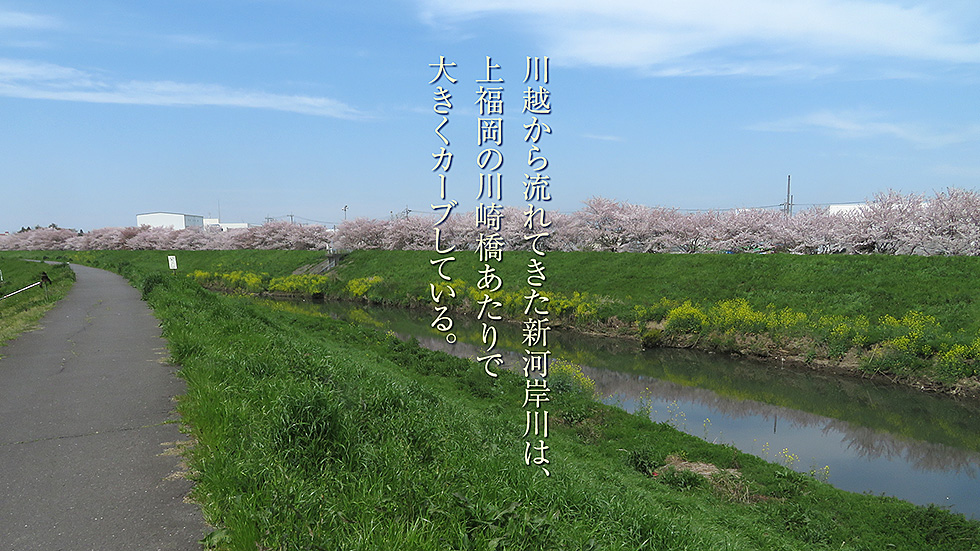
江戸時代、江戸と川越を結ぶ大動脈だった新河岸川は、上福岡あたりで大きく巾着のように曲がっている。それもいまは、河川整備という名の環境破壊が進み、高く盛られた護岸にはたくさんの桜が植えられている。例年なら、斜面の菜の花ももっとたくさん咲いているのに、菜の花もコロナに遠慮していたのだろうか。2020.4.7
The Shinkagishi River, which was a major artery connecting Edo and Kawagoe in the Edo period, makes a sharp turn around Kamifukuoka. Nowadays, the river has been destroyed in the name of river maintenance, and many cherry trees have been planted along the high revetment. Usually, there are many more rape blossoms on the slope, but I wonder if the rape blossoms were also reserved for the corona.
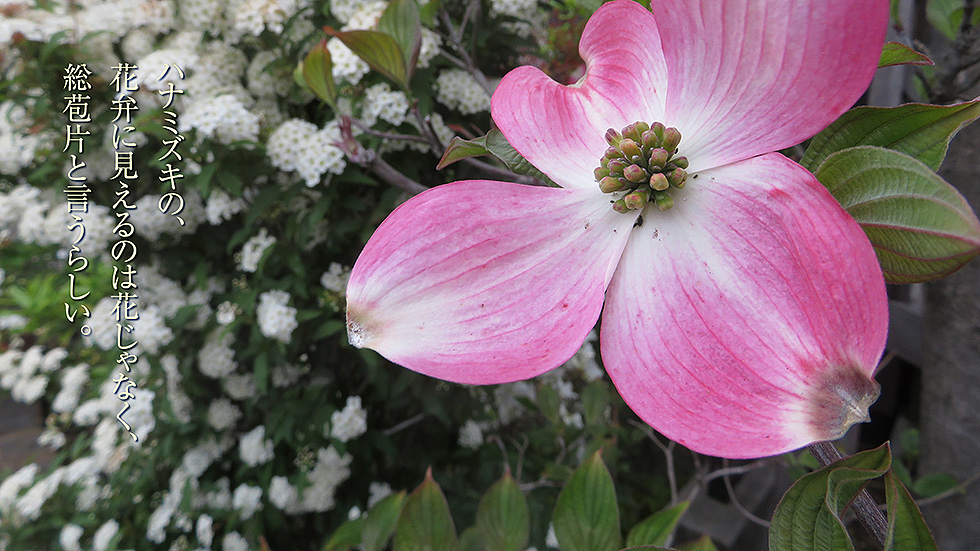
武蔵村山市大南の公園、ハナミズキの、花弁に見えるのは花じゃなく、総苞片と言うらしい。実際の花は、真ん中に寄り添っている芽らしいもので、この写真ではまだ咲いていない。その後の花は、コデマリなのだが、こっそりスノーボールに変えても、きづかれないのが面白い。2020.4.22
Around the beginning of 2000, a family of ducklings moved from the moat of the Imperial Palace across Uchibori Street to the pond next to Mitsui & Co. They were treated like VIPs, with the police even mobilized to watch them move. Now that the Mitsui headquarters building has been rebuilt, the pond is no longer there. I wonder where these ducklings are living now?
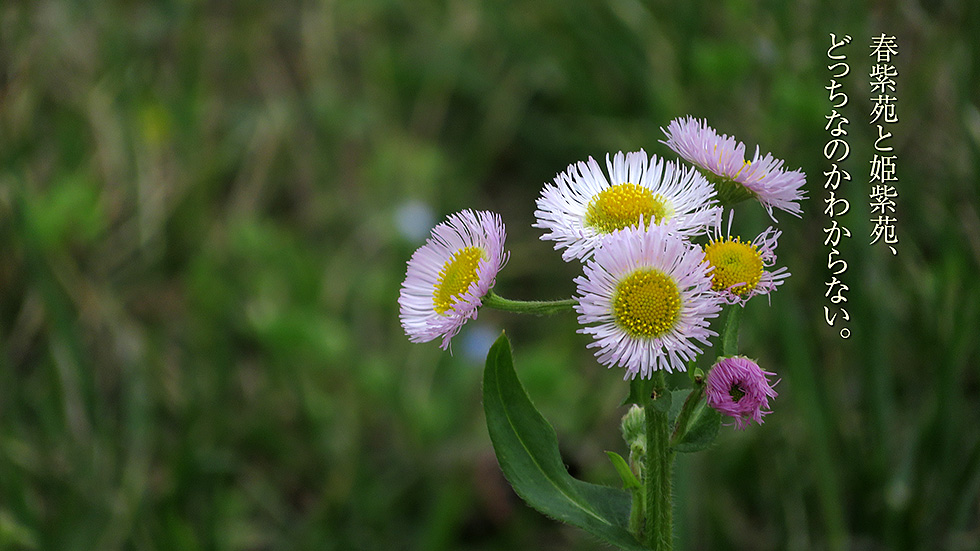
漢字で書くとよけいにわけがわからないが、4月頃から咲くのがハルジオン、5月ぐらいから咲くのがヒメジオンらしい。だから6月頃にはどちらも咲いているのだとか。いずれにしても、ややこしいが、両方ともアメリカからやって来た、ガイジンさんなのだとか。写真の花は、調べてみたら春に咲くハルジオンだった。2020.4.22
The Chinese characters for the two types of flowers are even more confusing, but it seems that Philadelphia fleabane blooms from around April and Annual fleabane from around May. So, it is said that both are in bloom around June. In any case, it is complicated, but I heard that both of them are gaijin who came from the United States. I looked up the flower in the photo, and found it is a Philadelphia fleabane, which blooms in the spring.
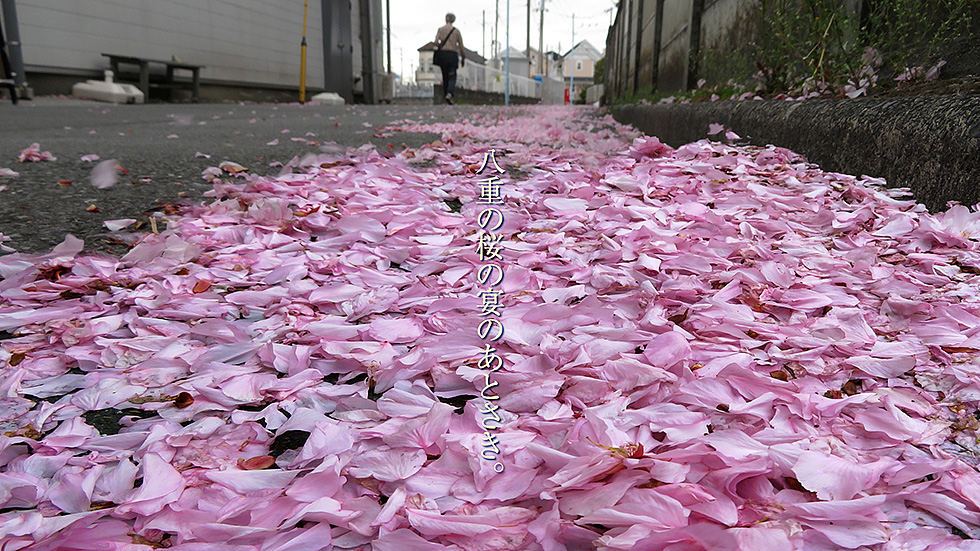
染井吉野やヤマザクラなら花弁も小さいので、ここまでにはならないし、逆に花弁の大きい八重桜ではあまり花吹雪にはならない。しかしこの日は違った。北からの強烈な風に飛ばされた八重桜の大きな花びらが、まるで宴のあとのように道路一面を覆っていた。玉川上水駅の北、立正佼成墓地の脇。2020.4.22
Somei-Yoshino and yamazakura cherry blossoms have small petals, so the blossoms do not form this big a snowstorm, and conversely, yaezakura cherry blossoms with large petals do not form a snowstorm. However, this day was different. The petals of the large yaezakura, blown by the strong wind from the north, covered the entire road as if they were after a feast. The road is located by Rissho Kosei-Cemetery, north of Tamagawa-josui Station.
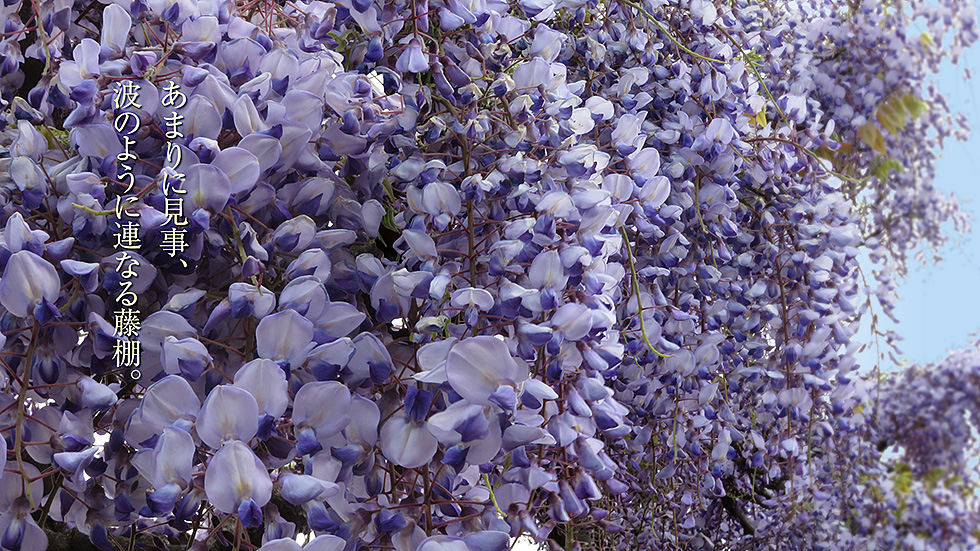
大宮の先、芝川遊歩道近くの一般民家。自転車で通り過ぎようとしたときに見つけたこの藤棚。あまりに見事なので、写真を撮らせてもらったが、一緒になぜか銀色の缶ビールの空き缶が数個ぶら下げてあった。これは何かのおまじないか、虫除けか鳥除けか、謎のままその場を立ち去り、その後も謎のまま放置してある。
A private house near the Shibakawa River promenade at the end of Omiya. I found this wisteria trellis when I was about to pass by on my bicycle. It was so magnificent that I was allowed to take a picture of it, but for some reason there were several empty silver beer cans hanging along with it. I left the place as a mystery, and it has remained a mystery to me ever since.
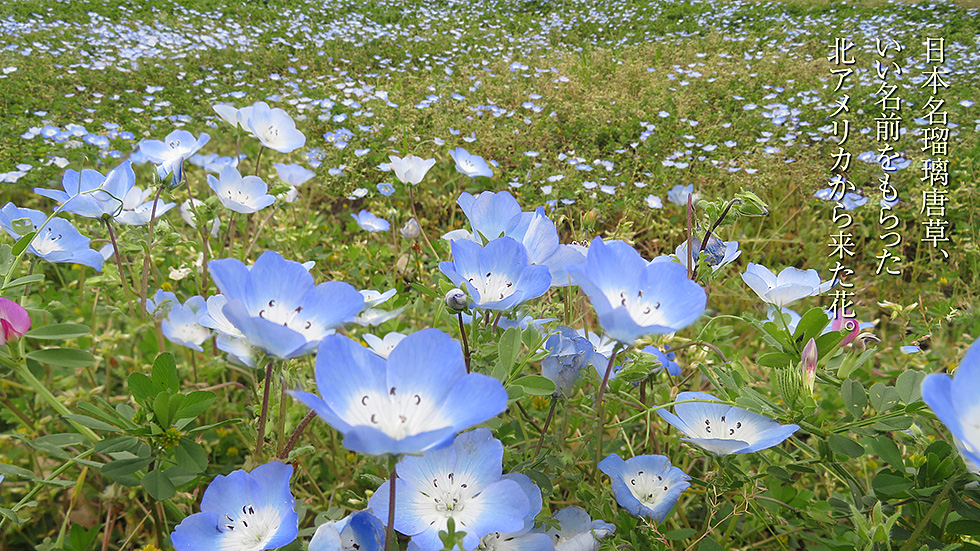
浦和、見沼氷川公園の近所で見かけたネモフィラ。誰かが植えたとか手入れをしているという風ではなく、自然に生えちゃった感じだった。よく見ると色の違うものも少し混じっている。最近は、ひたち海浜公園が有名だけど、どっこいこちらも負けてはいない。無料でほっこりできるから。英語名は、Baby blue eyesと言うらしい、言い得て妙。
Baby blue eyes seen in the neighborhood of Minuma Hikawa Park in Urawa. It did not look as if someone had planted or taken care of it, but as if it had grown naturally. If you look closely, you can see some different colors mixed in. Hitachi-Kaihin Park is famous these days, but this park is no slouch either. It's free and relaxing.The English name is "baby blue eyes," which is apt.
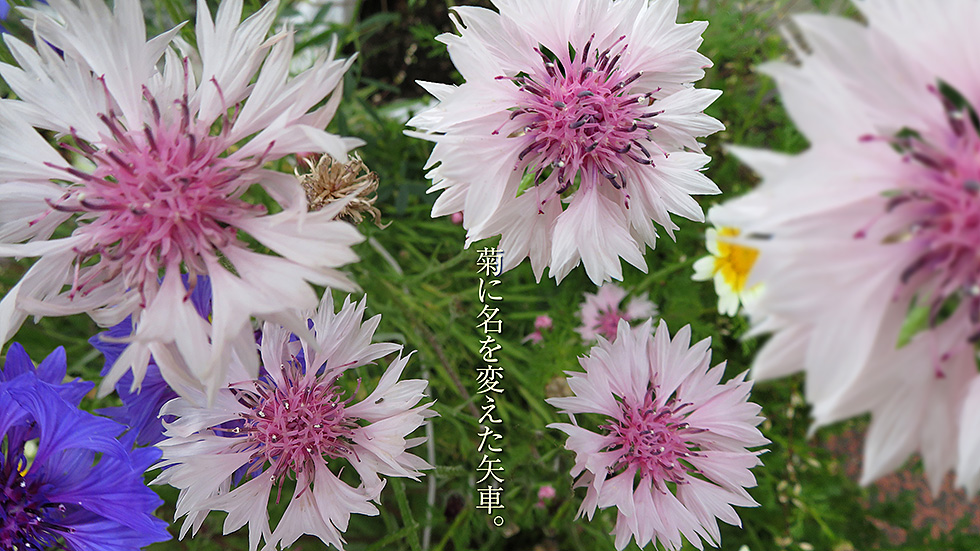
この花たちは、もともと矢車草と呼ばれていたものを、矢車菊と分類され、最近では、図鑑でも区別されて矢車菊として、紹介されているのだとか。立川、砂川公園でたくさんの仲間に囲まれていた。遙か東ヨーロッパからやって来て、まぜこぜにされて、いろいろな色に染められて、やっと個体認識が叶った。めでたしめでたし。
These flowers, originally called arrow wheel grass, have been classified as arrow wheel chrysanthemums (cornflower), and recently they have been distinguished and introduced as arrow wheel chrysanthemums in illustrated books. I was surrounded by many of them at Sunagawa Park in Tachikawa. They came from far away in Eastern Europe, were mixed up and dyed in various colors, and finally became recognizable as individuals. We are happy for them.
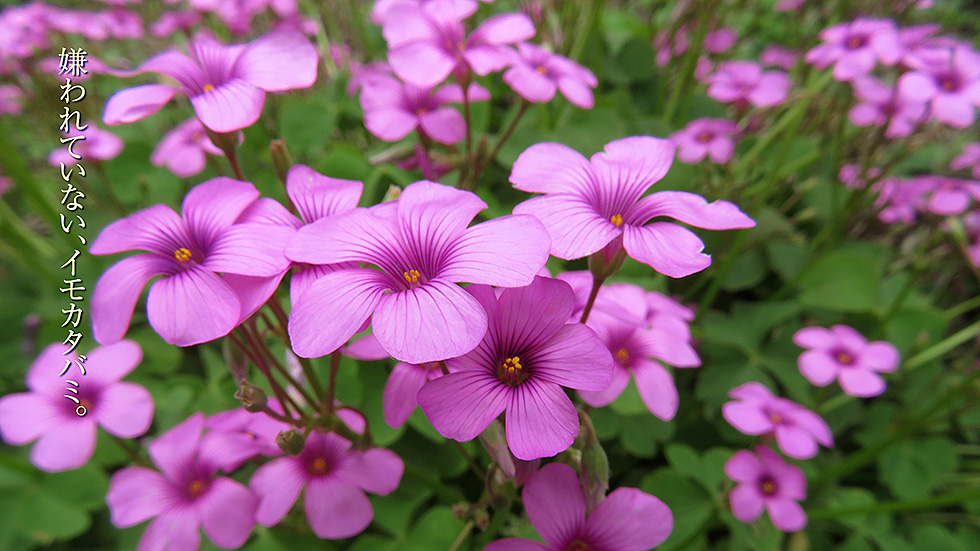
よく似た花で、ムラサキカタバミというのがあり、そちらは、環境省により要注意外来生物に指定され、見つけたら駆除しましょうだそうで。南アメリカ原産で、江戸時代末期に観賞用として導入されて以降、日本に広く帰化しているのにかわいそうな嫌われ者。このイモカタバミは、4月頃から、あちこちで見られる、小さな赤紫の花。こんなに可愛いし、嫌われてもいないが、あまり人目には留まらないのが哀しい。
There is a similar flower, Violet wood-sorrel, which is designated as an invasive alien species requiring attention by the Ministry of the Environment and will be exterminated if found. It is native to South America and was introduced as an ornamental plant at the end of the Edo period (1603-1867), and since then has become a poor, hated species, even though it has become widely naturalized in Japan. This Jointed woodsorrel is a small reddish-purple flower that can be seen here and there, starting around April. It is so cute and not hated, but it is sad that it does not get much attention.
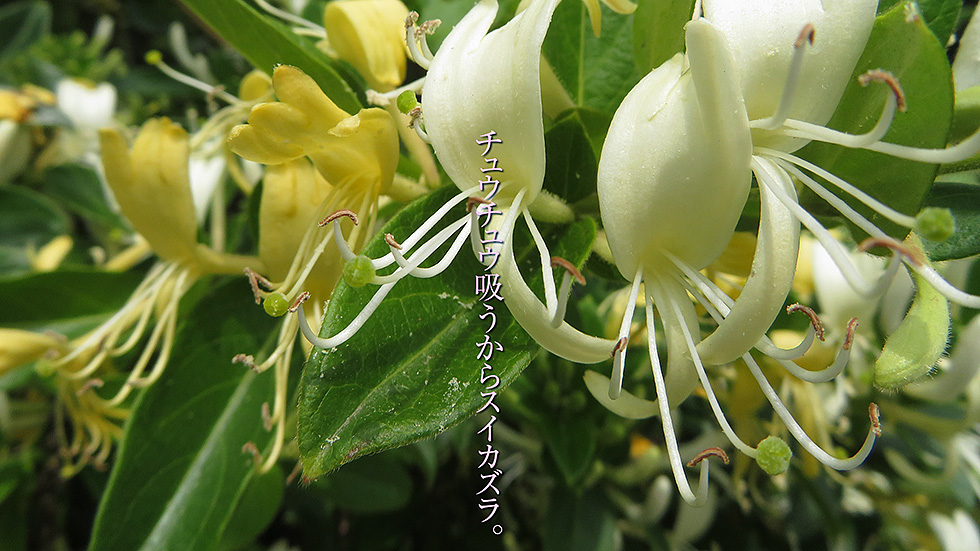
日本でまだ砂糖が乏しかった頃、花ごとちぎって根元から蜜を吸うからスイカズラというようになったのだとか。まあ、わかるような気がするが、当時、ミツバチにとっては、人間はまさに強敵だったのではないか。甘い香りも放っているから、よけいに人間はつけあがってチュウチュウやっていたのだろう。連休明け、小平上水本町の玉川上水散策路にひっそりと咲いていた。
When sugar was still scarce in Japan, honeysuckle was called honeysuckle because the bees would tear off the entire flower and suck the nectar from the base. At that time, humans must have been a formidable enemy to honeybees. The sweet fragrance of honey bees must have made them even more eager to chew on the honeycomb. After the consecutive holidays, I found this flower quietly blooming along the Tamagawa-josui walking path in Kodaira, Josui-honcho.